Smart Protection for
Blind Curves

An autonomous safety system that eliminates blind spots at U-turns using real-time sensor fusion and instant-response signaling.

The Accident Calculation

Blind curves are fatal because they deny drivers the single most important asset: Time.

The Reaction Gap

At 40 km/h, a car travels 11 meters per second. A driver needs 2.5s to react to a sudden obstacle. On a blind U-Turn, you often have less than 5 meters of visibility. The math simply doesn't add up.

40%

of head-on collisions occur on sharp bends where visual confirmation is impossible until it's too late.
The Digital Solution

We replace human "guesswork" with millisecond-precision sensor fusion.

Extended Horizon

Our sensors "see" around the corner for you. By placing detectors 50m ahead of the curve, we effectively extend the driver's visual range, triggering warnings long before visual contact.

10x

Faster warning delivery than human visual processing, giving drivers the critical distance needed to brake.

Real-World Deployment

Mountain Passes

Ideal for narrow hairpin bends where oncoming traffic visibility is effectively zero.

Urban U-Turns

Prevents collisions in dense city traffic where U-turns are obstructed by dividers or vegetation.

Parking Garages

Manages blind corners in multi-level parking structures to prevent fender benders.

Key Technologies

Real-time Detection

High-precision PIR sensors detect oncoming vehicles instantly, eliminating blind spots.

Cross-Alerting

Smart logic triggers warnings on the opposite side, ensuring drivers are alerted before they turn.

Embedded Logic

Powered by Arduino Nano with optimized C++ code for millisecond-level response times.

Intelligent Sensor Logic

u_turn.ino
// Constants for sensor & LED pins
const int pirPin1 = 2;    // PIR sensor 1
const int pirPin2 = 3;    // PIR sensor 2
const int redPin1 = 13;   // Red LED 1 (Side 1 Alert)
const int redPin2 = 9;    // Red LED 2 (Side 2 Alert)

void loop() {
  // Read PIR sensors
  int pir1 = digitalRead(pirPin1);
  int pir2 = digitalRead(pirPin2);

  if (pir1 == HIGH) {
    // Car on Side 1 -> Warn Side 2
    blinkRed(redPin2);
    digitalWrite(redPin1, LOW);
  } 
  else if (pir2 == HIGH) {
    // Car on Side 2 -> Warn Side 1
    blinkRed(redPin1);
    digitalWrite(redPin2, LOW);
  } 
  else {
    // No Traffic -> All clear
    blinkGreen();
  }
}

Conflict Detected

If Side A has a vehicle, Side B immediately flashes RED to stop oncoming traffic.

Reverse Conflict

If Side B has a vehicle, Side A flashes RED to prevent collision.

Safe State

When no sensors are triggered, both sides show GREEN, allowing free flow.

System Architecture

Logic Flow

Loading Architecture...

User Flow

Loading User Flow...

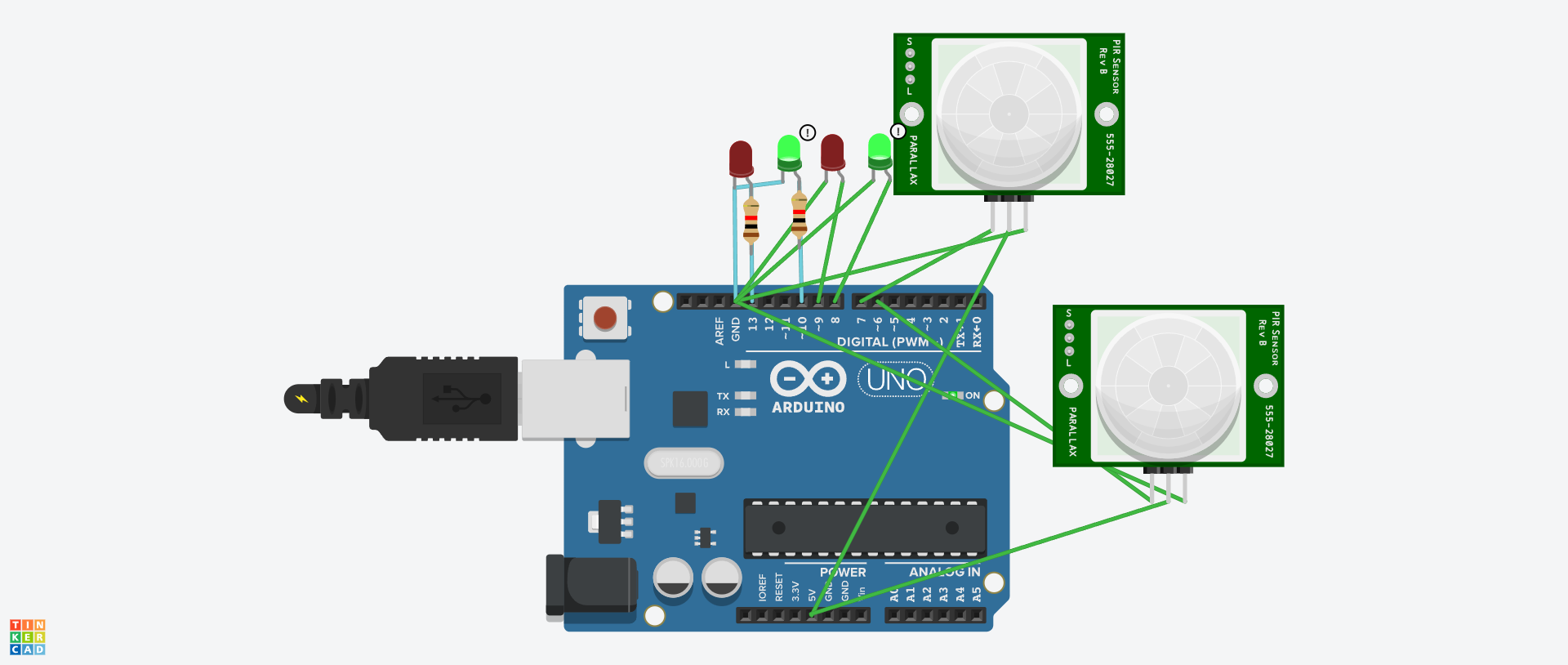
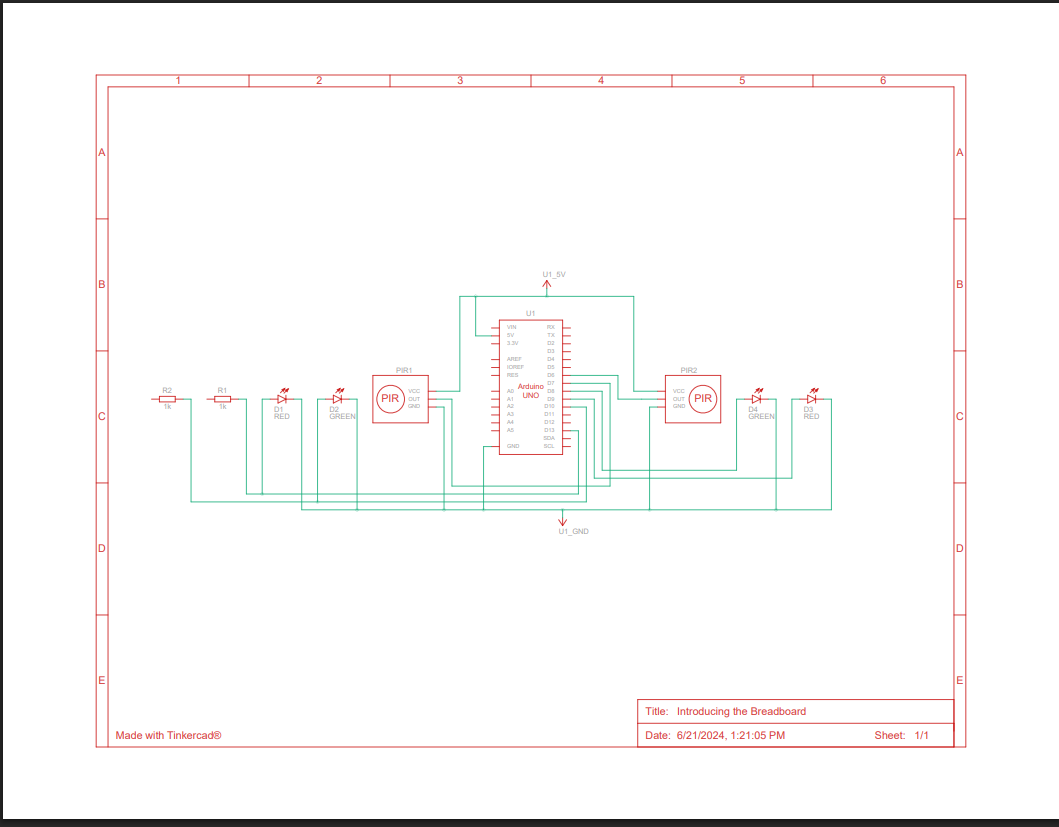
Hardware Implementation

Core Technology Stack

Hardware

  • Arduino Nano (ATmega328P)
  • HC-SR501 PIR Motion Sensors
  • High-Intensity LED Modules

Software

  • Embedded C++ (Logic)
  • Tinkercad (Simulation)
  • Eagle (PCB Design)

Future AI

  • Python YOLOv5 (Vision)
  • TensorFlow Lite (Edge ML)
  • Cloud Telemetry Dashboard

Meet the Builders

Akshayaa08

Akshayaa

Team Lead

FlemingJohn

Fleming John

Arduino Coding & Docs

savana-jones

Savana Jones

Circuit Connection